


We help governments, businesses, and nonprofits modernize WordPress websites to align with ADA requirements and WCAG accessibility standards—using clear processes, documented testing, and long-term support.
Designed for compliance today. Structured for sustainability tomorrow.
For Government & Public Agencies
Counties, municipalities, and public agencies face clear federal requirements under the ADA, including new DOJ rules governing website and mobile accessibility.
We help public-sector organizations:
- Prepare for DOJ Title II accessibility requirements
- Align websites with WCAG 2.1 Level AA standards
- Rebuild or modernize WordPress sites with accessibility built into templates and navigation
- Address PDFs, forms, and public-facing documents
- Document compliance efforts for internal records and audits
- Train staff on accessible content workflows
For Businesses & Nonprofits
Businesses and nonprofits are increasingly subject to ADA Title III accessibility expectations, legal complaints, and customer demand for inclusive digital experiences.
We help organizations:
- Reduce accessibility-related legal and reputational risk
- Improve usability for all visitors, not just those with disabilities
- Align WordPress websites with WCAG accessibility standards
- Make online forms, content, and media usable with assistive technology
- Build internal workflows that keep sites accessible as content changes
One Standard. Different Pressures. The Same Solution.
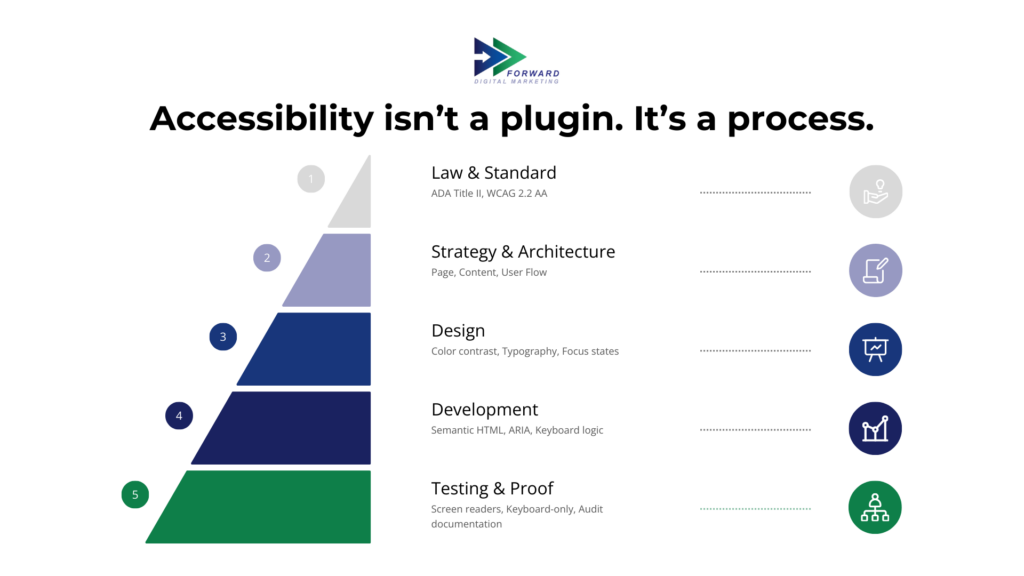
Our ADA-Ready Website Approach
Step 1: Accessibility Discovery & Inventory
- Full inventory of public-facing pages
- Review of forms, PDFs, and documents
- Identification of third-party tools or embeds
- Initial automated accessibility scanning
- Manual spot checks for high-risk issues
Step 2: WCAG-Aligned Website Structure
- Semantic HTML and proper heading structure
- Keyboard-accessible navigation and menus
- Color contrast and readability compliance
- Accessible forms and error handling
- Screen reader–friendly layouts
- Mobile accessibility considerations
Step 3: Content & Document Remediation
- High-priority PDFs and documents
- Image alternative text guidance
- Video and media accessibility requirements
- Clear rules for links, buttons, and downloads
Step 4: Testing, Documentation & Handoff
- Automated and manual accessibility testing
- Keyboard-only navigation testing
- Assistive technology checks
- Remediation summary
- Accessibility documentation for internal records
- Public-facing accessibility statement
- Clear guidance on ongoing responsibilities
Step 5: Governance & Ongoing Support (Optional)
- Monitor accessibility as content changes
- Train staff on accessible publishing
- Address new documents or features
- Maintain documentation over time
Compliance Readiness Review
What It Is:
A clear, realistic assessment of your website’s accessibility status with actionable next steps.
What the Review Includes:
- High-level accessibility audit (automated + manual)
- Identification of WCAG 2.1 Level AA gaps
- Review of forms, PDFs, and critical documents
- Evaluation of third-party tools and integrations
- Risk-based prioritization of issues
- Plain-English summary of findings
What You Receive:
- Written accessibility findings summary
- Prioritized remediation roadmap
- Budget and timeline considerations
- Guidance for internal teams and vendors
Why Start Here:
- Prevents over-scoping
- Reduces wasted spend
- Creates defensible documentation
- Supports informed decision-making
Start your Compliance Readiness Review today and get a clear, actionable roadmap to align your website with ADA and WCAG standards.
Ready to See Where Your Website Stands?
What Changed With the DOJ Deadlines in 2026?
In April 2026, the Department of Justice extended the ADA Title II web accessibility deadlines by one year. State and local governments serving 50,000 or more people now have until April 26, 2027. Smaller governments and special districts have until April 26, 2028. The technical standard did not change: websites and mobile apps must meet WCAG 2.1 Level AA.
The extra year is not a reason to wait. Remediation on an older site with hundreds of pages and PDFs takes months, and Title II accessibility obligations still apply in the meantime. The organizations that start now finish on their own schedule instead of the deadline’s.
Frequently Asked Questions
Which ADA deadline applies to my county or city?
It depends on total population. Governments serving 50,000 or more people have until April 26, 2027. Smaller governments and special districts have until April 26, 2028. We will confirm which applies to you during your Readiness Review.
Does the ADA apply to small business and nonprofit websites?
Title II covers state and local governments. Businesses and nonprofits open to the public fall under Title III, and accessibility complaints and lawsuits against their websites are common. Meeting WCAG 2.1 AA is the clearest way to reduce that risk.
Will an accessibility widget or overlay make my site compliant?
No. Overlays change how a page looks on top of the code, but the underlying problems remain. We fix the website itself, document the work, and train your team to keep it accessible.
What about our PDFs and old documents?
PDFs count. Part of every Readiness Review is an inventory of your documents, so you know which ones to fix, replace, or archive.
How long does remediation take?
It depends on the size of the site and the number of documents. Your Readiness Review includes a timeline and budget so you can plan around your deadline.