


A DIY website can only take your business as far as it was built to go. What worked when you started may be what’s holding you back now.
Many small businesses, nonprofits, and municipalities start with a DIY website for good reasons. It’s affordable, fast to launch, and puts control directly in your hands. For a while, that’s enough.
But expectations have changed. Websites are no longer just digital brochures. They are expected to load quickly, work flawlessly on mobile devices, integrate with other systems, meet accessibility standards, and support real business goals. As your organization grows, the website that once helped you get started can quietly become a limitation.
We see this regularly when organizations invest time into marketing, social media, or outreach but hesitate to send people to their own website. The issue is rarely effort. It’s usually that the site was never built to support what the business has become.
Quick Take
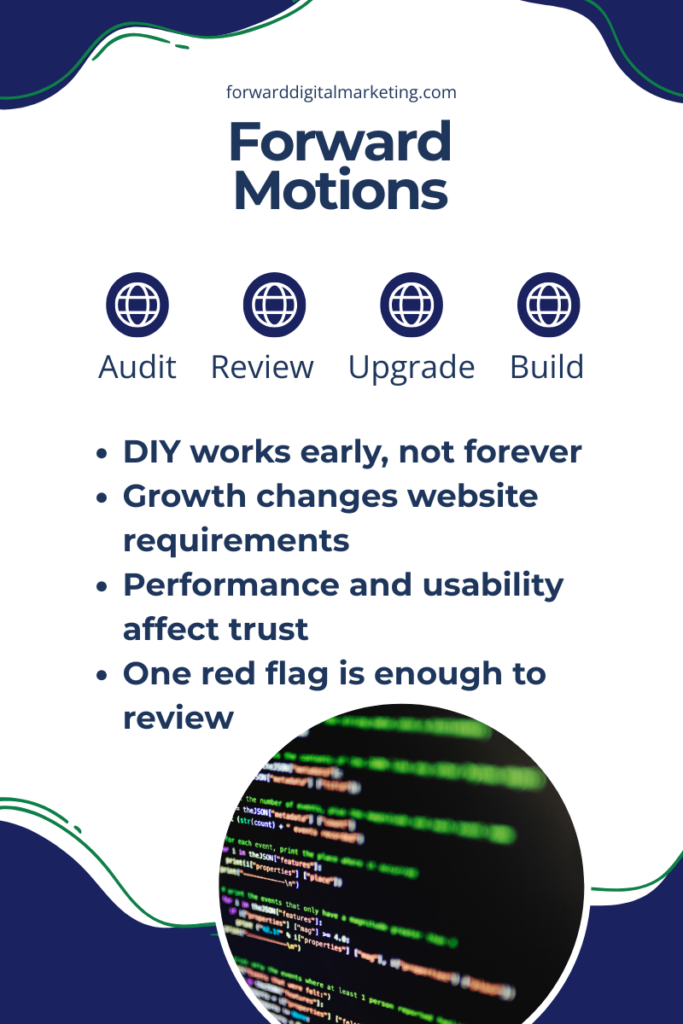
- DIY websites work best for early-stage or low-demand use
- Growth changes what a website needs to do
- Poor usability and performance reduce trust
- A site can limit progress without visibly “breaking”
- Even one warning sign is worth reviewing
At Forward Digital Marketing, we help small businesses make that leap from DIY to done right — ensuring your website performs, converts, and evolves with you.

When Does a DIY Website Stop Being Enough?
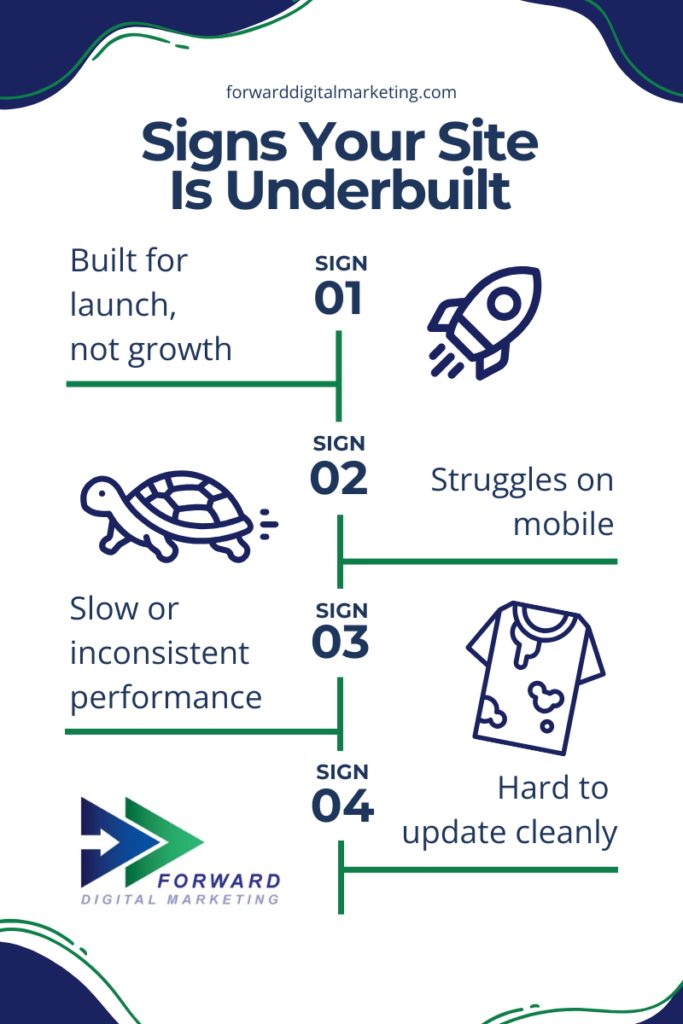
A DIY website stops being effective when it can no longer support your current traffic, user expectations, or operational needs. If the site is slow, hard to use on mobile, or difficult to update correctly, it becomes a bottleneck. This often happens gradually, which makes it easy to overlook. The key issue isn’t the platform — it’s whether the site was designed for where your organization is now.
Your DIY Website Was Built for a Different Stage
Most DIY sites are created to answer a simple need: “We need to be online.”
They are not usually designed for:
- Higher traffic volumes
- Multiple user types with different needs
- Ongoing content updates
- Long-term scalability
As your business matures, the site often stays frozen in its original structure. Navigation becomes cluttered. Pages are added without a clear hierarchy. What once felt manageable becomes fragile and inconsistent.
Performance and Mobile Experience Matter More Than They Used To
User expectations have changed, especially on mobile. Slow load times, awkward layouts, and hard-to-tap buttons create friction immediately.
Common issues we see:
- Pages loading slowly due to bloated builders or plugins
- Mobile layouts that technically “work” but are frustrating to use
- Forms that are difficult to complete on smaller screens
These issues don’t just affect user experience. They reduce engagement, trust, and search visibility.
Your DIY Website No Longer Reflects Your Credibility
As organizations grow, their brand expectations grow with them. A site that felt acceptable early on may now feel outdated or incomplete.
This often shows up when:
- You hesitate to share your website link
- The design no longer matches your offline professionalism
- Competitors appear more polished or easier to navigate
Your website sets expectations before any conversation happens. When it lags behind your real-world capabilities, it creates unnecessary doubt.
What This Means for Businesses
A website should support your operations, not quietly work against them. When a site can’t adapt to new goals, new users, or new standards, it limits growth even if everything else is working well.
Ignoring these signals can lead to:
- Missed inquiries or service requests
- Lower trust from first-time visitors
- Wasted effort in marketing campaigns
- Increased internal frustration managing updates
Upgrading doesn’t always mean starting over, but it does mean reassessing structure, performance, and purpose.
Frequently Asked Questions
How do I know if my website is actually the problem?
If traffic, engagement, or conversions have stalled despite other efforts, the website deserves review. Internal hesitation about sharing the site is also a strong signal. Even one clear issue is enough to investigate.
Is a DIY website bad by default?
No. DIY sites are useful at the right stage. Problems arise when the business grows but the site does not evolve alongside it.
Does upgrading mean rebuilding everything from scratch?
Not always. Sometimes the issue is structure, performance optimization, or accessibility — not the entire platform. A proper review clarifies what actually needs to change.
What features do growing organizations typically outgrow first?
Common gaps include mobile usability, forms and integrations, accessibility compliance, and content organization. These needs increase as traffic and expectations grow.
How often should a website be reviewed?
At minimum, a structural review every 1–2 years is reasonable. Major changes in services, audience, or traffic should trigger a review sooner.
What to Do Next (Your Upgrade Path)
At Forward Digital Marketing, we don’t treat websites as design projects alone. We treat them as systems that should support clarity, operations, and long-term growth. When a site starts to feel limiting, that’s usually a sign it’s time to step back, assess the structure, and align it with where the organization is now and where it’s going next.
Option A: Improve What You Have
- Speed optimization
- Pages reorganized for conversions
- Professional content refresh
Option B: Migrate to a More Scalable Platform
- WordPress benefits: ownership, customization, SEO control
- Hosting reliability + support
Option C: Full Redesign
- Strategic overhaul aligned with growth goals